Smallsats from Rwanda and Egypt Launch from ISS


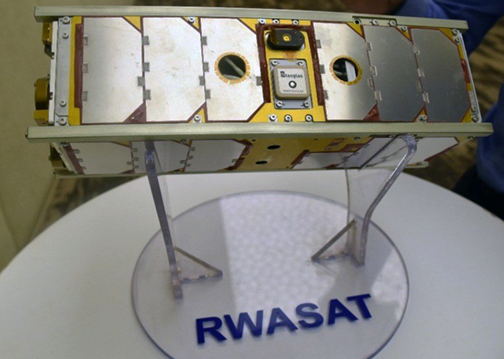
Photo of Rwanda’s RWASat-1 smallsat.

In a posting by David Oni at the Space in Africa infosite, he reports that the African space industry has recorded another milestone as the nations of Rwanda and Egypt have launched their 1st and 8th satellites (NARSScube-1 and RWASat-1), respectively.

The satellites were carried aboard Japan’s Kounotori-8, (aka HTV-8), a robotic cargo spacecraft carrying a payload of supplies, experimental materials and new replacement batteries to help power the International Space Station (ISS).

The HTV-8 which was launched by Japan’s Mitsubishi Heavy Industries (MHI) from one of the company’s H-IIB rockets, which was designed to carry both a pressurized and unpressurized cargo compartments.

The rocket, which was commissioned by Japan’s Aerospace Exploration Agency (JAXA), took off from Japan’s Tanegashima Space Center at its scheduled instantaneous launch window of 12:05 PM EDT (1:05 AM JST) on Tuesday, September 24, and arrived the International Space Station on Saturday,  September 28.


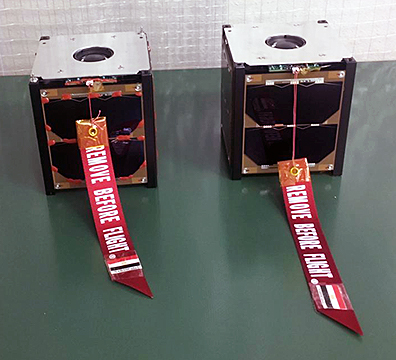
NARSScube-1 is a single-unit cubesat built by Egypt’s National Authority for Remote Sensing and Space Sciences (NARSS).

Photo is courtesy of NARSS.

Among the cargo carried onboard the HTV-8 rocket were three smallsats (AQT-D, NARSScube-1 and RWASat-1) for deployment from the International Space Station via the JEM Small Satellite Orbital Deployer (J-SSOD).

NARSScube-1 and RWASat-1 were built to the cubesat standard, and are scheduled to be released from Kibo module’s airlock later this year.


Journalist David Oni.

To read the entire article,
please access this direct Space in Africa infosite link…

Perigee Aerospace Signs on to use Southern Launch Rocket Facilities in South Australia

Perigee Aerospace has signed an agreement to use the Southern Launch rocket facilities in South Australia, starting next year.

Signed at the 8th Space Forum in Adelaide, South Australia, the agreement sees the two New Space startups work together to launch small payload rockets over the Great Australian Bight. Southern Launch CEO Lloyd Damp signed the deal with Perigee CEO Yoon Shin at the beginning of Space Week in South Australia. The pair committed to testing the launch facility in 2020 ahead of regular, commercial launches from 2021.

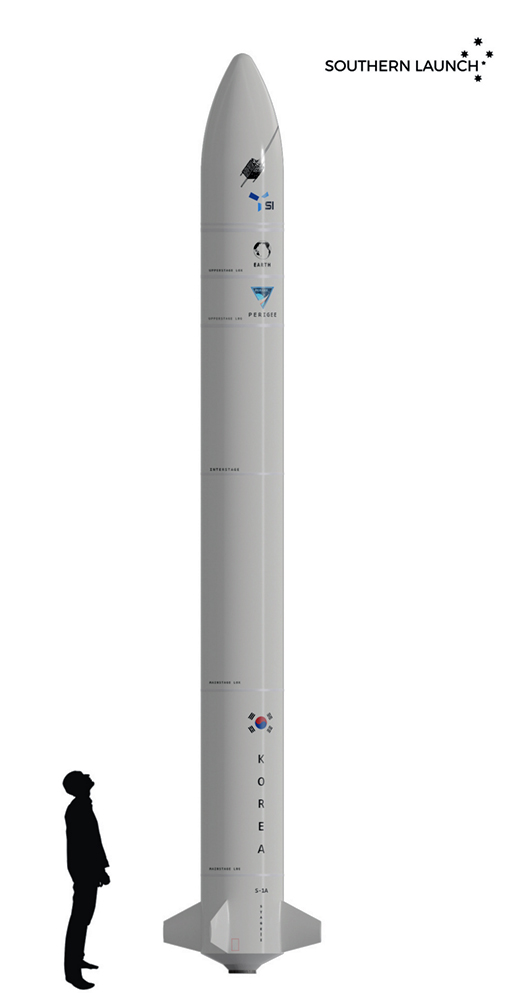
Yoon Shin said he already had customers for his small launch vehicle Blue Whale, pictured to the left, designed to lift smallsats into low altitude high inclination orbits. “We have various customers willing to launch their payloads ranging from 35 to 50 kilograms on our rocket,” he said. “So we are making some of the deals, and since our launch date is secured, right now we can start progressing those deals even further.”

Started in 2012, Perigee Aerospace began by developing and launching numerous sounding rockets for meteorological research for the Korean government. In 2018 and 2019 the company received two rounds of venture capital backing from some of South Korea’s leading technology investors including Samsung Venture Investments and LB Investment (a subsidiary of LG) to support the development of Blue Whale. The company is also supported by KAIST, South Korea’s top technical research institution.

Damp said securing a commercial launch partner with such good backing would fast track the development of the launch site at Whaler’s Way at the tip of the Eyre Peninsula. He said there would not be a problem building the necessary infrastructure in a year because Southern Launch had been granted Major Project status by the South Australian Government and the physical requirements of a New Space project were not massive.

A lot of people say ‘space launch! this means Cape Canaveral’, you know, bulldozers, all this type of stuff,” Damp said. “In reality, we’re putting up a glorified garden shed for the vehicle assembly and then a piece of concrete, which is about the same size footprint as a residential home. So this is tiny, tiny equipment to launch rockets into space. It’s called New Space.”

The 1190 hectare Whaler’s Way site is about a 35 minute drive from the regional center of Port Lincoln. The complex is 250 km. west of Adelaide and 500 km. south of Woomera, the historic rocket launch site that is restricted to military use.

Damp said the project was an example of how the entire business model around space has changed. “It’s the small sats, a couple of kilograms, helping farmers get connected to their land, or monitoring illegal shipping, fishing, you name it.”

Shin said he started negotiations with Southern Launch after meeting Damp at the International Astronautical Congress in Bremen, Germany, in 2018. He said there were three main reasons for signing up with Southern Launch, the first being its location, which is suitable for launching smallsats into sun synchronous or polar, or inclinations down to 60 degrees into orbit, which are the inclinations most of the customers are interested in. The second reason was that launching over the Great Australian Bight meant there was little air or maritime traffic and the third reason was the strategy of the newly established Australian Space Agency to prioritize commercial applications.


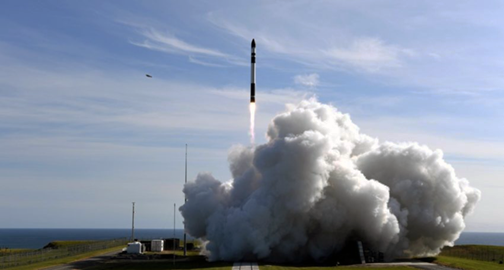
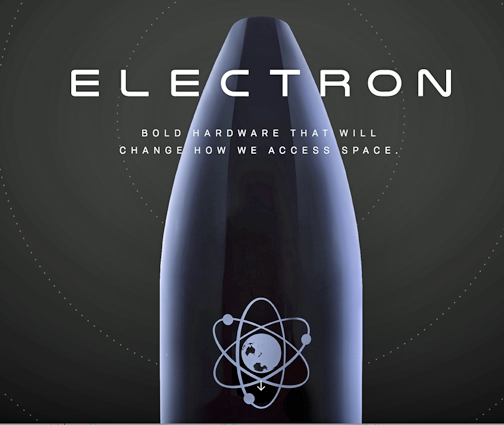
The Whalers Way Orbital Launch Complex in South Australia will be capable of launching rockets like Rocket Lab’s Electron, pictured here.

Australia aims to grow the space market segment from AU$3.9 billion to AU$12 billion by 2030 and double space industry employment to 30,000. South Australia has been a significant player in the nation’s space industry and is home to major Tier 1 defence companies and several emerging space startups. The space industry in South Australia received a further boost in April when it was announced the $245 million national SmartSat CRC would be headquartered in the state. The research centre will join the Australian Space Agency at an innovation neighborhood called Lot Fourteen in the CBD on Adelaide. Lot Fourteen will also house the Defence and Space Landing Pad, Mission Control Centre, Space Discovery Centre and a growing ecosystem of space startups such as Myriota and Inovor.

Article by Jim Plouffe, Contributor, The Lead

Virgin Orbit and the UK Partnership Brings RAF Test Pilot to the LauncherOne Team

The Royal Air Force (RAF) and Virgin Orbit have announced the next step in a new space partnership with the selection of an RAF test pilot to be seconded to the small satellite launch program, pending U.S. and U.K. regulatory approvals.

The announcement was made in Long Beach, California, aboard the iconic RMS Queen Mary ship — a fitting venue given the ship’s history as Winston Churchill’s floating headquarters for parts of World War 2 and a symbol of the U.S./U.K. special relationship. The British Consulate in Los Angeles hosted the event, where Air Vice-Marshal Simon “Rocky” Rochelle and Virgin Orbit CEO Dan Hart announced that Flight Lieutenant Mathew “Stanny” Stannard had been selected.

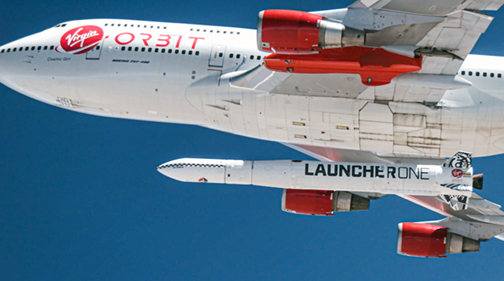
Stanny is currently a pilot with one of the RAF’s test and evaluation squadrons and will join the pioneering Virgin Orbit program to enable learning across a range of areas. Virgin Orbit has developed a new smallsat launch vehicle called LauncherOne, which is released from a modified Boeing 747-400 called Cosmic Girl.

The Royal Air Force’s Red Arrows display team flew over the ship as part of the event, which is one of the last stops on their North American tour. Earlier in the day, the Red Arrows joined up in flight with Virgin Orbit’s customized 747-400 carrier aircraft, Cosmic Girl, for a special mixed-formation flypast above the Mojave Air and Space Port in California.

Air Vice-Marshal Rochelle, the RAF Air Capability Chief of Staff, said that it’s great news that the RAF can now confirm the secondment of Flight Lieutenant Stannard to the Virgin Orbit team. This move comes through the company’s close collaboration and formal partnership with Virgin Orbit within Team ARTEMIS. Having one of the RAF Test Pilots working at the heart of such a cutting-edge program is a significant step in the organization’s space journey. It also reinforces the close relationship the RAF has with industry and with the U.S. — we expect this to further enable U.K. satellite launch capabilities.

The secondment is expected to last three years. Flt. Lt. Stannard added that he was delighted to have been selected for this role and he’s looking forward to working with the Virgin Orbit team. There are significant opportunities for the RAF in the space domain so to be at the forefront of this area, working in direct partnership with Virgin Orbit is a real privilege.

The former U.K. Defence Secretary, Penny Mordaunt, announced the Ministry of Defence’s (MOD) ambitious space program in July, committing £30 million ($36.9 million) to fast-track the launch of a smallsat demonstrator within a year. The demonstrator, also known as Program ARTEMIS, is being delivered by a new transatlantic team of U.K. and U.S. defense personnel and industry partners including Virgin Orbit. This activity will sit alongside a host of other programs that will demonstrate the U.K.’s developing role in space.

Virgin Orbit has just commenced its first proper launch campaign, transporting its orbital test rocket to the Mojave Air and Space Port in September to conduct a final series of check-outs and engineering demonstrations. In the coming weeks, the company will move swiftly through these exercises, leading up to a captive carry flight prior to LauncherOne’s maiden flight to LEO.

Virgin Orbit CEO Dan Hart explained that as an American company with British ownership guided by Sir Richard Branson, a truly legendary British entrepreneur, it is perhaps within the company’s DNA to help the United Kingdom and the United States collaborate in space. As part of Team ARTEMIS, Virgin Orbit has been working with the RAF and the U.S. Air Force to demonstrate the utility of smallsats and responsive, resilient space launch and operations. The company is thrilled to welcome Flt. Lt. Matthew Stannard to the firm’s team of hugely talented pilots where we know his presence will move the firm further, faster and to new heights.

British Consul General for Los Angeles Michael Howells commented that not only is this partnership a great demonstration of how the U.K. and U.S. continue to cooperate on security and defense, but it is also a perfect example of how Southern California and the U.K. remain hubs of innovation for the future of spaceflight. Virgin Orbit are already a key partner for a commercial spaceport in the U.K., and the UK is excited to continue as a global leader in small satellite technology and launch capability.


Orbit Fab Raises $3Million to Make Orbital Refueling Easier, Cheaper and More Accessible

Orbit Fab,  one of the companies competing in this year’s TechCrunch Disrupt Battlefield in San Francisco this week, has closed a seed round of $3 million. The funding comes from Type 1 Ventures, TechStars and others, and will help Orbit Fab continue to build on the great momentum it has already bootstrapped with its space-based robotic refueling technology.

You might remember the name Orbit Fab from a milestone accomplishment the young company achieved earlier this year: Becoming the first startup to supply water to the International Space Station, itself an achievement but also a key demonstration of the viability of its technology for use in orbital satellite refueling. Refueling satellites could have tremendous impact on the commercial satellite business, extending the operating life of expensive satellites considerably, which translates to better margins and more profitable businesses.


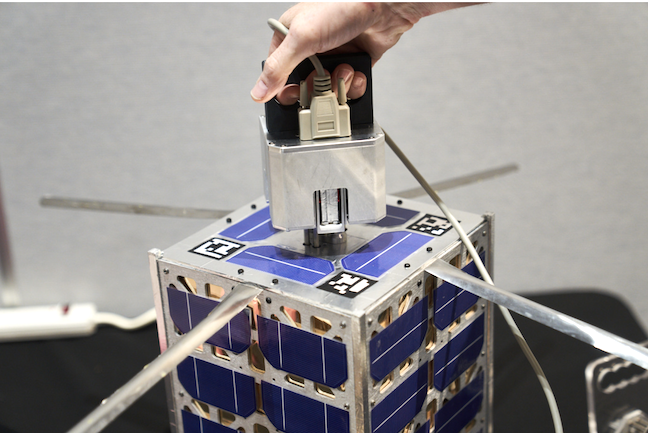
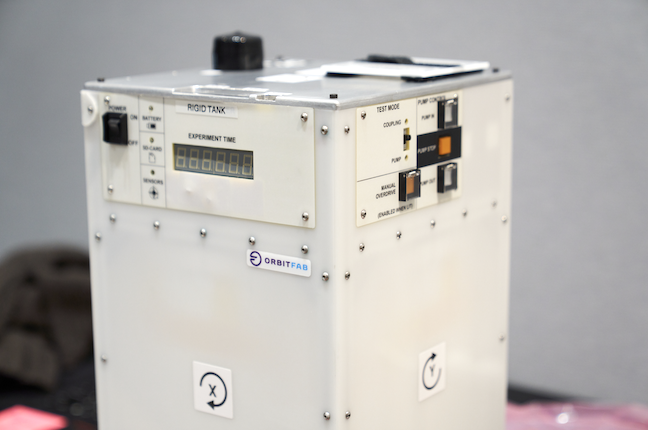
Orbit Fab’s first space payload, the ISS water resupply robot.

Thanks to co-founders Daniel Faber and Jeremy Schiel’s connections in the space industry, from more than 15 years working in space technology businesses in a leadership capacity, the company was able to demonstrate its technology working in space less than a year after Orbit Fab was actually founded. Faber, Orbit Fab’s CEO, and Schiel, the startup’s CMO, met when both were working at Deep Space Industries — Faber as CEO and Schiel as a contractor.

“We ended up reconnecting later on and really looking at a few different business models on how to push the industry forward,” Schiel said in an interview. “The one that really landed with customers, and the one that resonated with the industry was refueling satellites. Elon [Musk] has been making rockets reusable — we thought it’s time that we make satellites reusable as well.”

Starting from this realization, the pair founded the company in January 2018. They then secured their first round of pre-seed investment from Bolt in San Francisco in June that year, and also landed two contracts —  including one with NASA, and one with the International Space Station National Laboratory.

“Basically in four-and-a-half months, we got flight-qualified and human-rated from NASA our two tanker test beds that we flew to the International Space Station in December 2018, and March of 2019,” Shield said.

How did they do it with that speed? Faber credits their rapid progress largely to lead engineer James Bultitude, an accomplished space engineer with five payloads on the International Space Station already.

“He took [the project] from a napkin through to flight hardware in four-and-a-half months,” Faber said. “All qualified to NASA human-rated safety standards, which was quite the feat. We really had to push hard on NASA.”

Faber said that the company’s ability to spur the U.S. space agency into action has been a key driver of its success. In fact, he relayed a story in which their National Lab demonstration payload was actually left off of its intended flight, but the team was able to get its cargo approved by top NASA decision-makers over the course of a weekend and just barely made the cut as a result.

As for working with NASA as a startup, Faber said that it’s become a very different affair, with the agency eager and adapting to working more with younger companies and startups bringing a different pace of innovation to the field.

“The change is almost palpable on the phone with NASA – you can almost hear them changing,” he said.

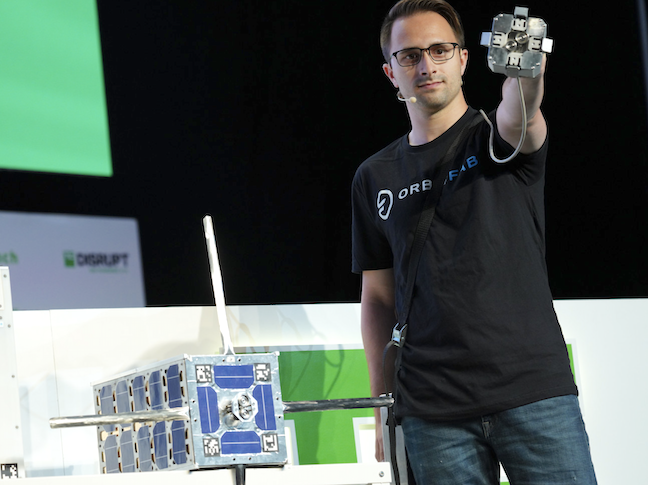
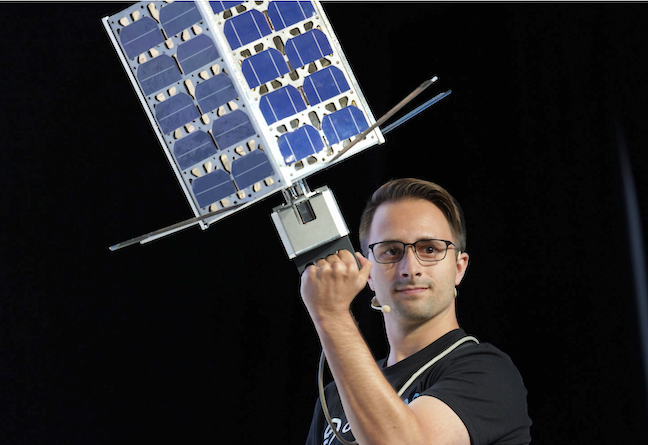
At Disrupt, Orbit Fab demonstrated their robotic connector for refueling on stage for the first time. The idea is that satellite makers will build their standard nozzles into their designs, and then a robotic refueler will be able to seek out the nozzle, open and then close on to the coupler, forming a solid connection to allow propellant transfer.

Already, Orbit Fab is talking to partners, including Northrop Grumman, and it’s a member of the Consortium for Execution of Rendezvous and Servicing Operations (CONFERS), an industry group that aims to make robotic service and maintenance of satellites a viable reality.

By Darrell Etherington, TechCrunch

Relativity Space Closes Series C Funding Round to Launch Entirely 3D Printed Rocket

Relativity Space has closed a $140 million Series C funding round, led by Bond and Tribe Capital.

With this $140 million funding round, Relativity is now fully funded to become the first company in the world to launch an entirely 3D printed rocket to orbit and to enter commercial service in early 2021. The Series C round includes participation by new investors Lee Fixel, Michael Ovitz, Spencer Rascoff, Republic Labs, and Jared Leto, with participation from current investors Playground Global, Y Combinator, Social Capital, and Mark Cuban.
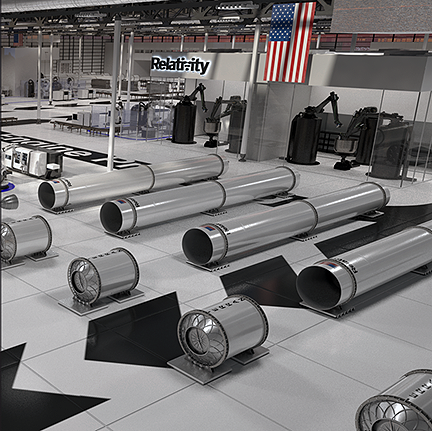

Relativity Space’s Stargate factory.

Photo is courtesy of the company.

Relativity is the only aerospace company to reinvent  the rocket and the entire manufacturing value chain. The company is developing the Stargate factory, the first and only aerospace factory to integrate machine learning, software, and robotics with metal 3D printing technology, enabling Relativity to build and launch rockets in days instead of years. Built from raw material to launch-ready in less than 60 days with a payload capacity up to 1250 kg., Relativity’s Terran 1 rocket is now upgraded to a 3-meter payload fairing with 2x larger volume than before, making it the most competitive in its class and providing unique flexibility to satellite customers. Both the Stargate factory and Terran 1 are completely designed, built, and operated in the United States.

Since closing a Series B fundraising round in March 2018, Relativity has achieved key milestones across product development, government partnerships, and business momentum and is on track to commence commercial service in 2021. The company advanced its groundbreaking Stargate factory to expand print production capacity 4x and developed several larger next-generation Stargate 3D printers with optimized controls and software, improving scalability and adaptability to evolving customer needs.

Among the technology milestones achieved are building fully printed first and second stage structures, printing and assembling a second stage, successful and intentional burst testing of Stargate printed stage structures to demonstrate ability to hold pressure, completion of first turbopump tests, completion of more than 200 engine hotfire tests at NASA Stennis Space Center, completion of the avionics architecture and hardware testing, and completion of the Terran 1 vehicle system design and coupled loads analysis.

Relativity Space also deepened its pioneering partnership with the U.S. Government. Relativity became the first venture-backed company to secure a launch site Right of Entry at Cape Canaveral Launch Complex-16 from the U.S. Air Force, secured a 20-year exclusive-use Commercial Space Launch Act (CSLA) agreement for five NASA test sites including E3 and E4 and a 20-year exclusive use lease for a 220,000 square feet factory at NASA Stennis Space Center, and became the only venture-backed company on the National Space Council User’s Advisory Group advising the U.S. White House. Relativity expects to secure a polar and Sun Synchronous Orbit (SSO) capable launch site by the end of 2019.
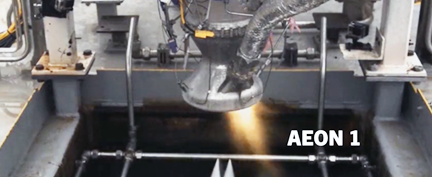
Relativity also accelerated growth of its Terran 1 customer manifest, including leading global satellite operators, commercial companies, and government payloads. The company announced customer contracts with Telesat, the renowned global satellite operator, to support their LEO constellation; mu Space, the innovative Thai satellite and space technology company to launch their first LEO satellite; Spaceflight Industries, the leading satellite rideshare and mission management provider, to launch Spaceflight’s dedicated smallsat rideshares; and Momentus, the provider of in-space shuttle services, to launch Momentus’ small and medium satellite customers to GEO.

To scale operations for first flight, Relativity increased infrastructure from 10,000 square feet to more than 280,000 square feet of operations, production, testing, and launch facilities, and is on track to reach over 480,000 square feet of infrastructure in 2019. Since last year, the company increased team size 8x from 14 to 110 employees, and hired a senior executive team of renowned experts and seasoned leaders from top private space and technology companies, including Distinguished Engineer Tim Buzza, VP of Government Business Development Josh Brost, VP of Launch Vehicle Development David Giger, VP of Operations Tobias Duschl, VP of Avionics and Software Brandon Pearce, and General Counsel Laura Lariu.

Tim Ellis, Co founder and CEO of Relativity Space, said the company was founded with the long term vision of 3D printing the first rocket made on Mars and expanding the possibilities for human experience in our lifetime. With the close of this Series C funding, Relativity Space is now one step closer to that vision by being fully funded to launch Terran 1 to orbit as the world’s first entirely 3D printed rocket. Bond and Tribe are unrivaled partners in leading this funding round and the firm is excited to build this important future together with our entire team.

Rocket Lab’s 9th Electron Mission to Boost Astro Digital Satellite to Orbit

Rocket Lab has revealed that Astro Digital will be the customer for Rocket Lab’s ninth Electron mission, and fifth mission of 2019.

The dedicated mission is scheduled to take place during a 14-day launch window opening on October 15 NZDT (14 October UTC). The mission will lift-off from Rocket Lab Launch Complex 1 on New Zealand’s Mahia Peninsula. Encapsulated in Electron’s fairing will be a single spacecraft for Astro Digital, a California-based satellite manufacturer and operator.

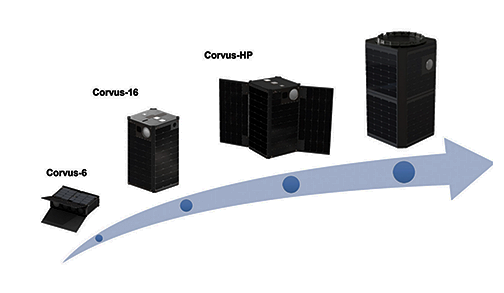
Astro Digital’s Corvus platform, a modular and scalable collection of satellite subsystems.

Image is courtesy of the company.

The mission is named ‘As The Crow Flies’ in a nod to Astro Digital’s Corvus Platform, which provides flexible and cost-effective solutions across a wide range of applications and mission profiles on bus variants ranging from 6U and 16U CubeSats to ESPA Class. Corvus is also a widely-distributed genus of birds which includes crows.

Rocket Lab’s Senior Vice President – Global Launch Services, Lars Hoffman, said the mission is a perfect example of the tailored, responsive and precise launch service sought by an increasing number of small satellite operators and that the company is honored Astro Digital has selected Rocket Lab as the launch provider for their dedicated mission.

He added that the Electron launch vehicle, with its unique Kick Stage, is perfectly positioned to provide the kind of tailored, rapid and responsive access to space that rideshare models simply can’t deliver,. With Electron and the company’s own launch sites, Rocket Lab is uniquely placed to give small satellite operators complete control over their own launch schedule and orbital requirements.

Mr. Hoffman noted that ‘As The Crow Flies’ has been moved forward in Rocket Lab’s 2019 launch manifest, after a customer originally slated for launch in the coming weeks requested a later launch date. By manufacturing standard Electron launch vehicles, rather than rockets tailored to specific missions, Rocket Lab can facilitate rapid manifest changes that support the responsive needs of small satellite operators. Rocket Lab augments this flexibility by operating the world’s only private orbital launch range, providing small satellite customers with unmatched launch schedule control.