
Narrow-Band IoT Successfully Tested by OQ Technology Using a Smallsat

OQ Technology, a Luxembourg-based satellite IoT and M2M service company, has successfully tested Narrow-Band IoT waveforms and synchronization procedures using a third-party smallsat.
The Tiger mission, which was approved and signed on July 26, 2019, demonstrates that NB-IoT technology can be used on flying Software-Defined Radio (SDR) payloads by uploading the waveforms to test the performance, paving the way for using Software-Defined Radio payloads as a service to provide connectivity.

The satellites used are GOMX-4A and GOMX-4B from GomSpace. NB-IoT is a Low Power Wide Area Network radio technology standard developed by the 3rd Generation Partnership Program (3GPP) to enable a global standard for IoT and M2M connectivity as a part of its Release 13 specifications (LTE Advanced Pro) in June 2016.
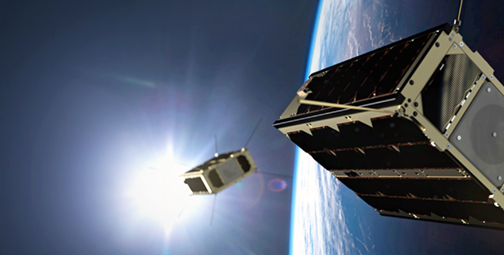

Artistic rendition of GomSpace smallsats on-orbit.

Image is courtesy of the company.

As of 2019, the Global mobile Suppliers Association has identified more than 160 operators across 69 countries investing NB-IoT network technologies. The 3GPP ecosystem is a global consortium backed by several telecommunication associations from countries such as Japan, USA, China, Europe, India, South Korea, and contributions coming from more than 680 individual member companies such as Qualcomm, Nokia, Ericsson, Apple, Google, ZTE, Huawei, NEC, Samsung, AT&T, Verizon, etc. that sell equipment, chipsets, software, handsets connectivity and other services in the global telecommunications market.

As a natural evolution of technology and market trends, 3GPP has foreseen the growing demand for global IoT connectivity and has retained NB-IoT as a part of its 5G standards (Release 15) and is working towards expanding the technology’s potential using Non-terrestrial Network (NTN) services for its release 17 which is expected to be rolled out by 2021/2022. NTN services leverage the use of non-terrestrial entities such as satellites in LEO, MEO, GEO, High Altitude Platforms and drones to extend coverage, service and capacity for mobile telephony, IoT and M2M connectivity.

OQ Technology began working on cutting edge R&D in 2016 to provide NB-IoT connectivity over LEO satellite, a standard with worldwide ecosystem and backed up by a global mobile standardization body. OQ Technology is targeting the cellular IoT communication market, as well as the Oil & Gas, Maritime, Industry 4.0, and Transport segments, particularly for the management and tracking of assets in remote areas. Whether this is digital oilfield applications, offshore monitoring, SCADA applications, asset tracking, fleet management, smart metering or predictive maintenance.

NB-IoT is a challenge for LEO due to high Doppler and delay environments. OQ Technology has successfully performed a “first-in-the-world” test of a 5G IoT technology over cubesats, and a “first” in using Orthogonal-Frequency-Division Multiple Access waveforms in a smallsat. OQ Technology will further experiments as a part of the Tiger mission over the next 3 months to optimize the link and system performance. OQ Technology aims to be a global 5G massive machine-type communications service provider to enable mobile operators extend their coverage beyond urban areas. The technology development has been partly supported by Luxembourg government through the LuxIMPULSE program.


ICEYE’s Spotlight Imaging Mode Successfully Deployed and Readily Available to Customers

ICEYE has announced that the company’s recently developed Spotlight imaging mode, which enables 1 meter radar imaging from the company’s satellite constellation, is now commercially available to customers around the world.

ICEYE Spotlight imaging is purpose-built to achieve a high resolution that supports a variety of use cases for both commercial and government customers.


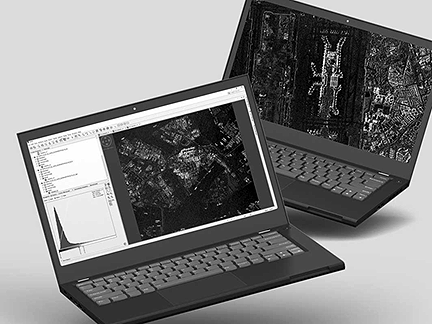
ICEYE Spotlight radar satellite image of the Kuwait International Airport’s new terminal under construction.

Image is courtesy of the company.

The successful deployment of Spotlight imaging for commercial customers is a major milestone for ICEYE, as well as a technological achievement. There are few comparable services available worldwide, and ICEYE is currently the only organization in the world to provide this capability as a commercial service from such small SAR microsatellites. High resolution radar imagery is especially useful for distinguishing between small objects, and in helping data users classify larger objects with more certainty. 1 meter Spotlight radar imagery is particularly useful in detailed volume monitoring of stockpiles, vehicle count monitoring, property damage estimation, and oil transshipment monitoring.


Example Spotlight SAR Data, featuring two locations in Singapore,are available for download on the ICEYE website in SLC and GRDformats.

Image is courtesy of the company.

ICEYE was the first organization in the world to develop technology that can achieve under 1 meter resolution imagery from SAR satellites under 100 kg. in mass. The latest two ICEYE SAR Satellites were launched in July of 2019. The company continues to grow its commercially available SAR satellite constellation with additional satellite launches at an increasing pace.

Pekka Laurila, CSO and Co-Founder of ICEYE, said the commodities sector is an early example where the availability of high-resolution SAR imaging can have dramatic impacts. It is now possible to track specific locations, often, with high reliability, and at an incredible level of detail. The potential benefits for our early users are immense, as the competitive edge our data provides is still very fresh in the market.

Rafal Modrzewski, CEO and Co-Founder of ICEYE, commented that the company and its partners are in a unique position in the world with this new commercial availability of high-resolution radar satellite data.


Planet’s Imagery Service Transitioned from the NGA to the NRO with a New Multi-Year Contract

The National Reconnaissance Office (NRO) has transitioned the Planet commercial imagery subscription service from the National Geospatial-Intelligence Agency (NGA) to the NRO.

As part of the transition, the NRO awarded Planet an unclassified, multi-year subscription service contract for daily, large-area, 3 to 5 meter resolution commercial imagery collection.

Recognizing the importance of mission continuity, the scope of the new NRO contract is comparable to NGA’s previous contracts with Planet and includes access to new daily unclassified imagery over multiple areas of interest to military planners, warfighters, and the national security community. The transition is consistent with NGA’s and NRO’s role in exploring new and viable commercial GEOINT opportunities for national security missions.

Pete Muend, Director, NRO’s Commercial Systems Program Office, said that with its large constellation of satellites, Planet can image country — and even continent-sized areas — every day. This capability to provide daily revisit over large areas of the Earth gives analysts unparalleled opportunities to discover and monitor activity for a wide range of applications. The NRO is committed to ensuring NGA and its customers continue to have access to Planet imagery to perform the vital analysis needed to create value-added geospatial products for our partners and policy makers.

David Gauthier, Director of NGA’s Source Commercial and Business Operations Group, added that NGA’s 2016 Planet subscription played a role in the agency’s analytic transformation, where the NRO is now focused less on pixels and more on information content and services. Planet imagery demonstrated the value that daily revisit of large areas, at 3 to 5 meter resolutions, to several mission areas – especially when combined with geospatial analytics. With the transition, NGA can continue to shift its focus to emerging commercial GEOINT products and services that uniquely support our user community.

The Kiwi Space Radar Installation Unveiled by LeoLabs

LeoLabs, Inc. has launched their Kiwi Space Radar (KSR) — as the first commercial radar to track objects in LEO smaller than 10 centimeters, the KSR sets a new standard for tracking the full range of threats to satellites from orbital debris.


LeoLabs’ Kiwi Space Radar installation in New Zealand.

Photo is courtesy of the company.

Located in New Zealand, the KSR also expands LeoLabs’ radar network to the southern hemisphere, and marks the first of a series of next generation LeoLabs radars to be deployed globally.

Michael Nicolls, Co-Founder and LeoLabs CTO, said the Kiwi Space Radar raises the bar on addressing the threat of collisions that have never before been tracked in LEO. By operating at a higher frequency than the firm’s earlier sensors, the KSR was designed to track an estimated 250,000 additional objects down to 2 centimeters in size. These objects account for most of the risk of collisions in space and KSR is the first big step toward addressing that risk. It will enable thousands of new satellites to safely use LEO.

Dan Ceperley, Co-Founder and CEO of LeoLabs, added that the Kiwi Space Radar represents a huge step in executing on the company’s vision for customers and investors. As thousands of satellites and new constellations deploy into LEO, LeoLabs’ mission is to provide a backdrop of data-driven transparency and certainty to support satellite operators, regulators,space agencies, and industries that rely on satellite services. Today’s KSR announcement proves a foundational piece of this vision. The firm’s radar network constitutes a clear strategic advantage in building the leading LEO services platform and the ‘catalogue of the future’ for LEO.

In addition to tracking small debris, the Kiwi Space Radar incorporates other significant features:

  • Automated search capability. As LeoLabs builds out the LEO catalog of the future, the KSR provides the ability to automatically search, discover objects and events.Generating orbital information without the need for human intervention will provide a more timely and complete picture for SSA and traffic management services.
     
  • Southern hemisphere coverage. The KSR is the first phased-array radar of its class located in the southern hemisphere. It improves frequency of revisits, enables better orbit assessment, and improves monitoring of maneuvers and events
    .
  • Improved precision in measurements and orbit determination. As the KSR dramatically increases the quantity and quality of observations for each satellite and piece of orbital debris, LeoLabs can deliver greater accuracy and timeliness to support mission decisions and threat assessment.


Mr. Ceperley noted that locating the Kiwi Space Radar in New Zealand was a strategic decision for LeoLabs and the company is delighted to become a full-fledged participant in this emerging space sector. The firm’s investment model is aligned with New Zealand’s vision of sustainable development and responsible stewardship of space. Through the leadership of the New Zealand Space Agency, and initiatives such as the Innovative Partnership program from the Ministry of Business, Innovation and Employment(MBIE), New Zealand is building what we believe to be one of the great space sectors for the next generation. A benefit of the LeoLabs presence in New Zealand is that the company has had the opportunity to engage across many communities, ranging from Ministerial levels to local communities, including schools, local government, entrepreneurs, and universities. Plans are to engage in this same “community-based” model as the firm expands to other parts of the world going forward.

As the Crow Flies … Gettin’ Ready for a New Zealand Launch

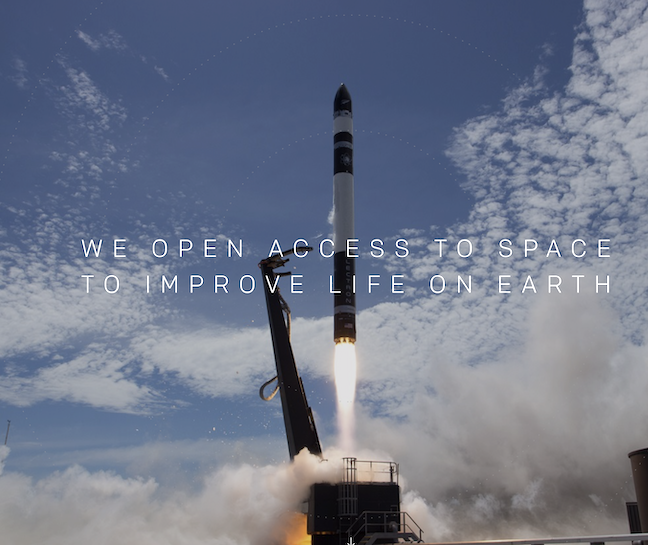
Rocket Lab‘s next mission, As the Crow Flies is ramping up for a launch within the 14-day window running from October 15 – 28, 2019.

The mission will lift-off from Rocket Lab Launch Complex 1 on New Zealand’s Mahia Peninsula. Encapsulated in Electron’s fairing will be a single spacecraft for Astro Digital, a California-based satellite manufacturer and operator.

Astro Digital provides customers with complete space-based systems and mission support services for applications such as Earth observation, satellite communications, and technology demonstration.

This mission will fly a Palisade technology demonstration satellite, a 16U CubeSat bus with on-board propulsion system, a next generation Astro Digital developed communications system, and software developed by Advanced Solutions Inc. including an advanced version of ASI’s MAX Flight Software.

The mission is named ‘As The Crow Flies’ in a nod to Astro Digital’s Corvus Platform, which provides flexible and cost-effective solutions across a wide range of applications and mission profiles on bus variants ranging from 6U and 16U CubeSats to ESPA Class. Corvus is also a widely-distributed genus.


Valued at Up to $986 Million … USAF SMC Selects Firefly Black as a Launch Service Provider

Firefly Black, LLC has been selected by the U.S. Air Force Space and Missile Systems Center’s Small Launch and Targets Division as a launch service provider for the Orbital Services Program-4 Indefinite Delivery/Indefinite Quantity contract.

Valued at up to $986 million, OSP-4 seeks to provide the Air Force with responsive launch solutions as a follow-on to its successful OSP-3 program.
Firefly Black intends to bridge demand between pure small launch capability and that provided by the National Security Space Launch program by providing a family of small-to-medium launchers and in- space transportation services.

Firefly Black, LLC is the national security and civil space subsidiary of Firefly Aerospace. Firefly Black provides launch services to Department of Defense, intelligence communit, and civil space customers seeking small-to-medium launch solutions for up to six metric tons of payload to LEO.

Using Firefly Aerospace’s Alpha and Beta launch vehicles and in-space Orbit Transfer Vehicle, Firefly Black provides America with industry leading capability at the lowest cost/kg in the emerging small launch vehicle class. Headquartered in Washington, DC, Firefly Black also performs Legislative and Executive Branch outreach and advocacy supporting the small satellite and small launch industries.

Leslie Kovacs, the President of Firefly Black, said the company is honored to have been selected by the Air Force for this key government space launch acquisition. Continuing rapid successes in the all-private development of the firmn’s Alpha launch vehicle, including Stage 2 qualification, a successful quad engine firing of our first stage, and conversion of Space Launch Complex 2 at Vandenberg AFB to support the company’s first quarter, 2020 first launch, underscore Firefly Black’s commitment to answer the nation’s call for responsive and reliable small launch services.


For all involved in the satellite and space industry and the various market segments that add value to these dynamic environments, the 2020 SmallSat Symposium is truly worth your consideration for attendance.

The 2020 SmallSat Symposium starts on February 3, 2020, with workshops, then the Conference runs February 4 to 6 at the Computer History Museum in Mountain View, California, in the heart of Silicon Valley.

The SmallSat Symposium is hosted by Satnews Publishers which, since 1983, has been a provider of a satellite news, media and events. This information packed forum was created to enable you and your company to secure a larger portion of market share as well as to take part in the next stages of your company’s or organization’s growth.

The personal connections at the SmallSat Symposium enable attendees to network with established organizations, subject-matter experts as well as ‘New Space’ entrants.

The SmallSat Symposium will focus on new technologies and the business environment that is shaping the implementation of smallsat constellations, smallsat launchers, the challenges facing the smallsat developer and actors as well as the enormous benefits of these advanced technologies that will benefit our world.

This event assembles more than 100 diverse speakers, all of whom possess deep industry experience. Additionally, numerous opportunities exist to mingle and network with peers while enjoying exceptional, complimentary meals and refreshment breakfast.

Learn more at this direct link…

DARPA Awards SEAKR Engineering with Blackjack LEO Demo Program Contract

SEAKR® Engineering, Inc. (SEAKR) has been awarded a Defense Advanced Research Projects Agency (DARPA) Pit Boss contract supporting the Blackjack Proliferated Low Earth Orbit Demonstration Program — Key contributors to SEAKR’s Pit Boss effort are Microsoft, Applied Technology Associates (ATA), Advanced Solutions Inc. (ASI), Kythera Space Solutions and NKrypt.

DARPA’s Blackjack program focuses on integrating commercial satellite technologies into a constellation of affordable, small, secure, and resilient military satellites. SEAKR’s Pit Boss solution will support the BlackJack program’s mission as a next generation on-board processor leveraging off-the-shelf electronics adapted through design implementation to function reliably in space. To deliver an extensible, scalable, and adaptable solution, SEAKR’s Pit Boss aims to deliver state of the art processing capability incorporating autonomous operations, artificial intelligence (AI), machine learning techniques, and bridged terrestrial and on-orbit technologies.

SEAKR’s processing system for DARPA’s Blackjack program leverages four generations of architectural capability supporting the full spectrum of payload processing performance requirements, with a high level of on-orbit reconfigurable processing capability. Pulling from its established heritage capabilities, strength in RF communications, along with the continuous product and architectural advancement, SEAKR continues to define leading edge, state-of-practice processing systems in partnership with Government, Civil, and Commercial entities.


DARPA’s Blackjack program aims to develop and demonstrate the critical elements for a global high-speed network in low Earth orbit (LEO) that provides the Department of Defense with highly connected, resilient, and persistent coverage.

Image is courtesy of DARPA.

SEAKR’s previous study and prototype advancements have successfully contributed to our customer’s ability to solve complex challenges imperative in advancing capability to meet today’s most daunting mission objectives. Key technologies being deployed and leveraged include: ADC and DAC Technologies, FPGA-based Processing Technologies, and ASIC-Based Processing Technologies.


For all involved in the satellite and space industry and the various market segments that add value to these dynamic environments, the 2020 SmallSat Symposium is truly worth your consideration for attendance.

The 2020 SmallSat Symposium starts on February 3, 2020, with workshops, then the Conference runs February 4 to 6 at the Computer History Museum in Mountain View, California, in the heart of Silicon Valley.

The SmallSat Symposium is hosted by Satnews Publishers which, since 1983, has been a provider of a satellite news, media and events. This information packed forum was created to enable you and your company to secure a larger portion of market share as well as to take part in the next stages of your company’s or organization’s growth.

The personal connections at the SmallSat Symposium enable attendees to network with established organizations, subject-matter experts as well as ‘New Space’ entrants.

The SmallSat Symposium will focus on new technologies and the business environment that is shaping the implementation of smallsat constellations, smallsat launchers, the challenges facing the smallsat developer and actors as well as the enormous benefits of these advanced technologies that will benefit our world.

This event assembles more than 100 diverse speakers, all of whom possess deep industry experience. Additionally, numerous opportunities exist to mingle and network with peers while enjoying exceptional, complimentary meals and refreshment breakfast.

Learn more at this direct link…

Out of Stealth Mode Comes SAR Satellite Space Company EOS Data Analytics

U.S.-based EOS Data Analytics Inc. (EOS), a space portfolio company of Noosphere Ventures, has unveiled EOS SAR – a project to develop its own synthetic aperture radar (SAR) sensors intended for deployment in a constellation of smallsats.

EOS SAR has been in stealth mode for more than two years. EOS has more than 5 years of experience in developing data analytics products and cloud services for optical and SAR data from satellites. Over the years, the company has developed an in-depth understanding of commercial and government remote sensing markets, which informed the decision to create its own SAR satellite constellation.

EOS engineers have already designed a radar prototype and are moving ahead with the development of a low-cost high-performance SAR payload for small satellites with ultra-high resolution down to 25 cm. EOS SAR satellites will operate in Stripmap and Spotlight modes (including interferometry) and will cover a wide range of applications. EOS is also considering dual-frequency SAR in X- and S-band on a single satellite. Dual-band operation increases versatility for all weather imaging and improves object-ground contrast. A special configuration of the radar front end allows for imaging of selected areas in both bands in a single orbit.


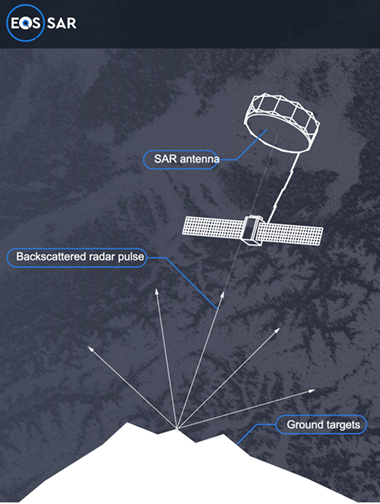
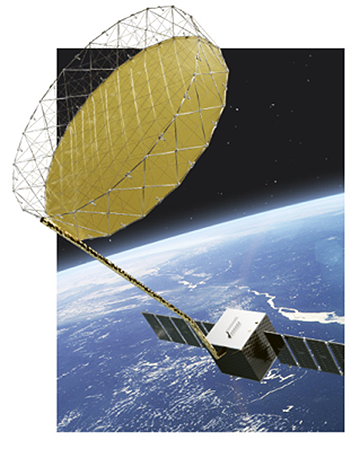
The SAR payload incorporates a deployable reflector antenna developed in-house at EOS. This antenna technology enables EOS SAR instrument to improve satellite efficiency and offer superior image quality. Moreover, the antenna itself has low mass and dimensional characteristics, making it more favorable and less costly to launch the satellite into orbit.

EOS is building a SAR satellite payload suitable for constellations enabling high revisit rates. A constellation of 12 satellites will provide 2-3 hours revisit time for a given area. The first SAR satellite launch is expected in 2022, with commercial constellation operations starting in 2023.

Max Polyakov, CEO of EOS and Managing Partner at Noosphere Ventures, said EOS learned that the remote sensing market has strong demand for high-resolution high-quality SAR data, but low supply of such data. The choice of SAR technology is driven by the need to image Earth’s surface through dense cloud cover, in any season and all weather. It is critical for users to have access to uninterrupted, persistent situational awareness. EOS is strategically leveraging deep expertise and diverse capabilities within Noosphere Ventures portfolio including radar electronics, deployable antennas, propulsion systems, batteries, and data analytics in order to create a SAR payload technology which delivers unsurpassed performance at an unbeatable price. At the same time, the company is open to cooperation and are currently looking for bus providers and a constellation owner to deploy and monetize the constellation. The constellation will be part of a fully U.S. owned and operated commercial remote sensing enterprise.

Kepler Communications to Begin First of Many Soyuz Launches with New Partners ISL and GK Launch Services

A launch agreement for the first two satellites of many more to follow has been signed with Kepler Communications, which will be working with Space Logistics B.V (ISL) and GK Launch Services. Kepler’s satellites will be sent into sun-synchronous orbit in Q2-Q3 2020, and will be the first of multiple batches of the next-generation platform, forming part of Kepler’s Low-Earth Orbit (LEO) constellation for global data services.

Kepler’s next generation of satellites will incorporate both a high-capacity Ku-band communications system and a narrowband payload, for both high-speed data transfers and low-power direct-to-satellite IoT connectivity. Planning to place approximately 140 satellites in LEO in three incremental phases, from 2020 to 2023, Kepler continues to execute on schedule against plan. Kepler has two demonstration satellites in orbit that are currently delivering Kepler’s high-capacity data transfer service to a number of early customers.      

Jared Bottoms, Head of Launch & Satellite Programs at Kepler said that ISL has been a key partner for Kepler as they have grown in their deployment strategy. They are excited to continue to use their unique deployers and services, this time with GK launch services to deploy the first of the next generation. ISL and Kepler partnered for the company’s first inaugural mission which successfully launched Kepler’s first satellite into orbit in January 2018, and its next satellite later in November in the same year. 

Abe Bonnema, Director of ISL, added saying that following the successful partnership for the launch of their demonstrator satellites, they are pleased and grateful to be selected by Kepler again for this important task of getting the first next-generation satellites to orbit on their 27th ISILaunch Campaign with their Soyuz partners next year. 

GK Launch Services CEO, Alexander Serkin concluded saying that they are happy that Kepler has chosen Soyuz-2 LV for launching its next-generation satellites. The GK team possesses all necessary competences to successfully and smoothly implement the mission that they hope will become a good basis for building a relationship with Kepler for future missions.

The company’s LEO constellation will grow to become a space data relay system to serve other constellations with high-speed data backhaul capabilities. Today, Kepler is focused on building the install base for Global Data Service™, its pole-to-pole wideband connectivity service for mobile and fixed applications. EverywhereIOT™, Kepler’s affordable solution for Internet of Things (IoT) devices, will enter user trials in the coming months. 

ICEYE and ST Engineering Geo-Insights Sign MoU for South East Asia Markets Support

ST Engineering Geo-Insights, and ICEYE have signed a Memorandum of Understanding (MoU) as well as a commercial reseller agreement to serve the commercial and government markets in South East Asia.

As a part of the agreement, the two companies will provide mutual support to develop the regional and global market for rapid revisit, high resolution SAR imagery and SAR based geospatial analytics.


The MoU signing between ST Engineering Geo-Insights & ICEYE in September of 2019.

ICEYE recently announced their three SAR satellite constellation is now available for commercial access, receiving significant attention in the global Earth Observation (EO) market. ICEYE is creating a growing SAR satellite constellation for frequent and reliable satellite-based information about any location on Earth, regardless of the time of day and even through cloud cover.

ICEYE is providing commercial data services to government and industry users. The company is actively increasing the size of their SAR satellite constellation, with two more satellites planned for launch by the end of  2019. ICEYE’s SAR smallsats can be manufactured and launched cost-effectively, providing up to 1 meter resolution SAR images.

ST Engineering Geo-Insights is a joint venture company formed between DSO National Laboratories and ST Engineering Electronics.  Leveraging on the strengths of the parent companies, Geo-Insights offers geospatial analytics and value-added services based on satellite imagery data to address growing global demands for timely insights.


For all involved in the satellite and space industry and the various market segments that add value to these dynamic environments, the 2020 SmallSat Symposium is truly worth your consideration for attendance.

The 2020 SmallSat Symposium starts on February 3, 2020, with workshops, then the Conference runs February 4 to 6 at the Computer History Museum in Mountain View, California, in the heart of Silicon Valley.

The SmallSat Symposium is hosted by Satnews Publishers which, since 1983, has been a provider of a satellite news, media and events. This information packed forum was created to enable you and your company to secure a larger portion of market share as well as to take part in the next stages of your company’s or organization’s growth.

The personal connections at the SmallSat Symposium enable attendees to network with established organizations, subject-matter experts as well as ‘New Space’ entrants.

The SmallSat Symposium will focus on new technologies and the business environment that is shaping the implementation of smallsat constellations, smallsat launchers, the challenges facing the smallsat developer and actors as well as the enormous benefits of these advanced technologies that will benefit our world.

This event assembles more than 100 diverse speakers, all of whom possess deep industry experience. Additionally, numerous opportunities exist to mingle and network with peers while enjoying exceptional, complimentary meals and refreshment breakfast.

Learn more at this direct link…